
What is POROPLAST?
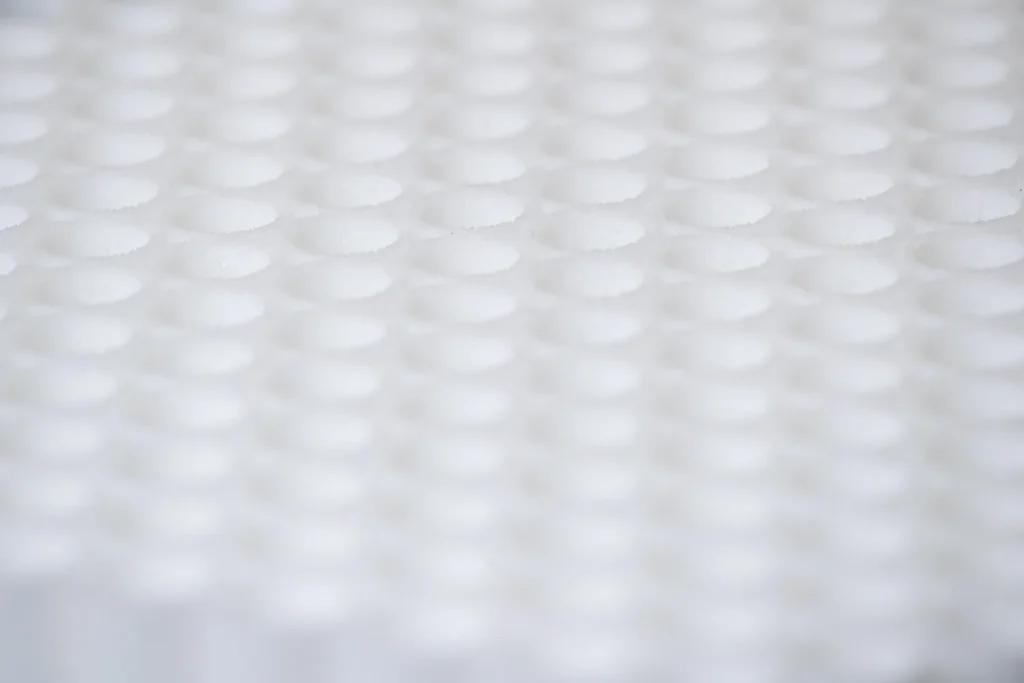
POROPLAST stands for microporous polyethylene from Alfred DURST FILTERTECHNIK. Our controlled sintering process gives your product its porous properties, so that the medium can pass through, be stored or be filtered. Thanks to fractionation and the targeted addition of additives, the result is a precisely adjustable component with an open-pore structure.
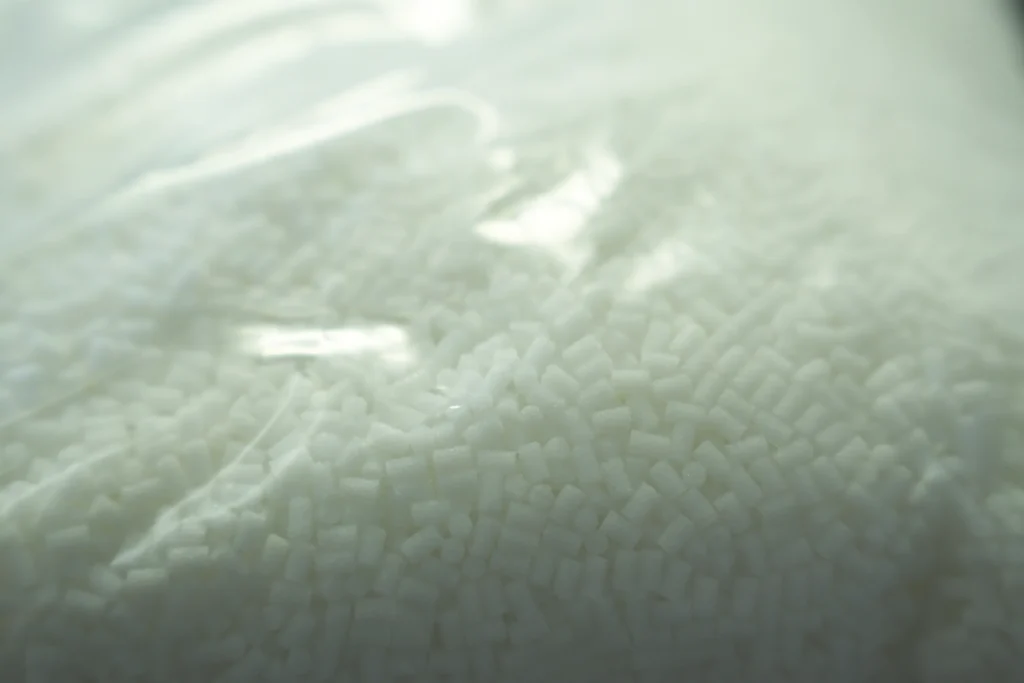
POROPLAST is a thermoplastic sintered plastic. Polyethylene offers a broad range of applications for the manufacture of porous parts. Without additives, our POROPLAST parts are hydrophobic and can become statically charged. As it is a natural material and its color is accordingly white and untreated, we call this standard version “natural”.
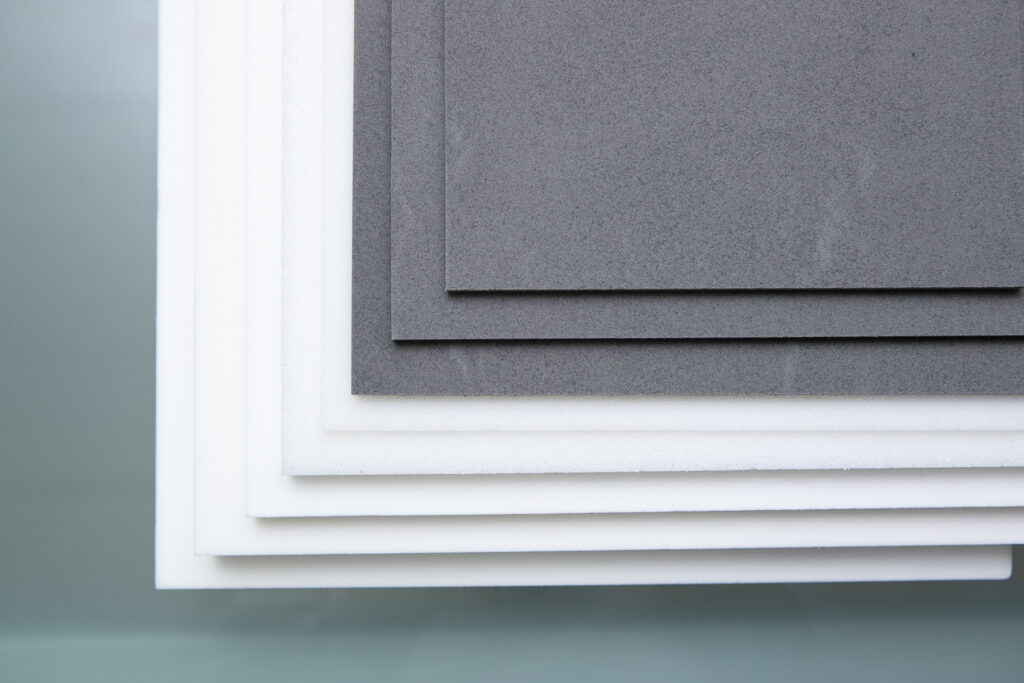
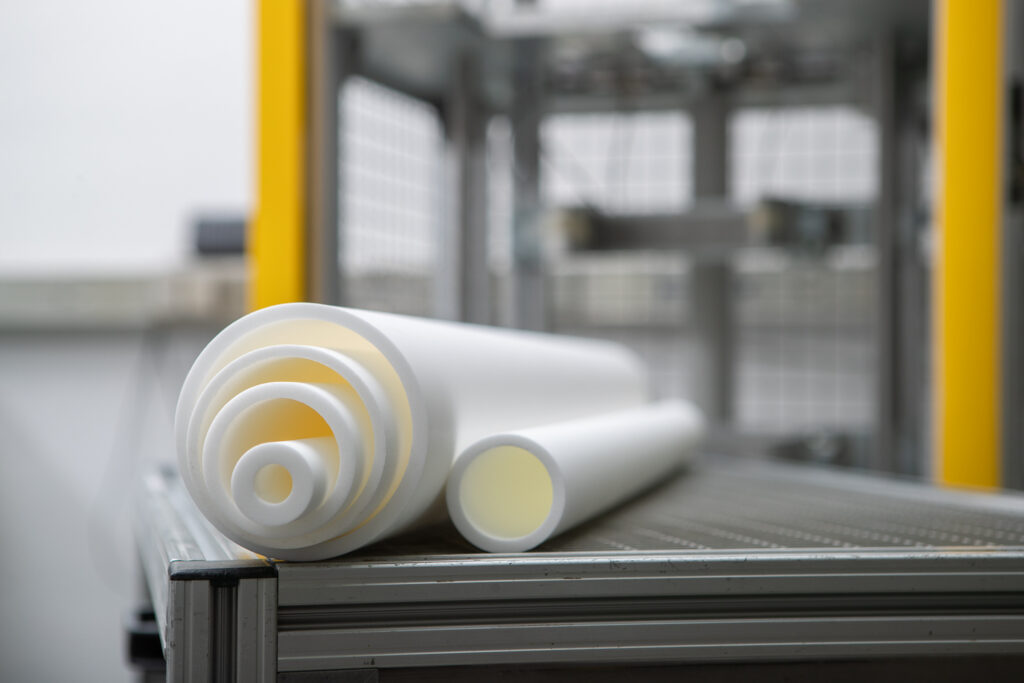
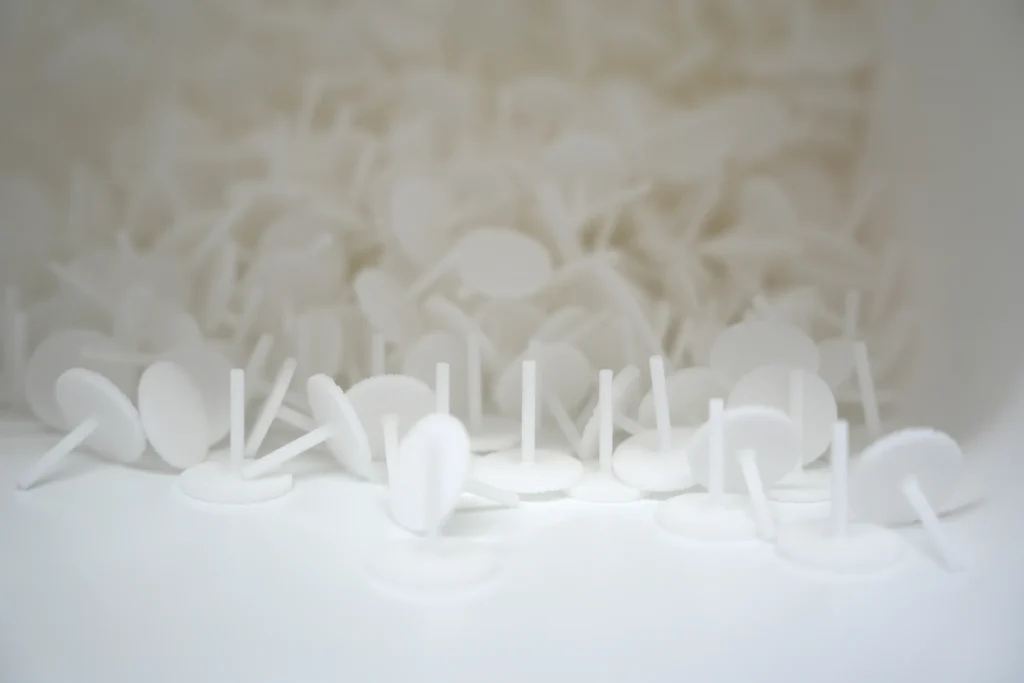
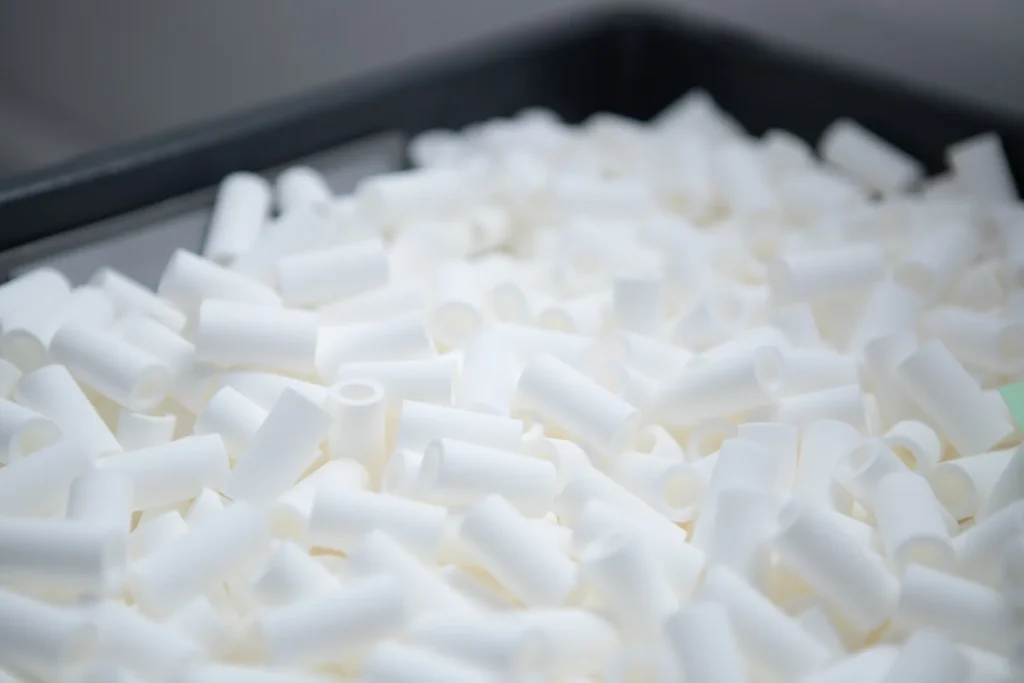
POROPLAST made of low-molecular-weight polyethylene is mainly used for parts with a more open pore structure, while higher-molecular-weight polyethylene is used for very fine-pored applications. Thanks to the open pore volume, our components achieve a significant weight reduction. Please note that resistance to mechanical, chemical and thermal stress increases with molecular weight. For more than 40 years, we have been producing tailored filtration solutions for air, gas and liquids from a polymer base material. This is how your precisely fitting products are made — for example porous plates, tubes, cartridges and customer-specific molded parts, manufactured to drawing.
Thanks to their open pores, our products are functional components in flow and filtration technology.
Material properties at a glance
Targeted additives in the manufacturing process allow the material properties to be tailored precisely:
- Hydrophilicity — water-absorbing, durable filters
- Antistatic behavior — for applications in potentially explosive atmospheres
- Coloring — customer-specific colors for branding or coding
- Increased strength and rigidity — for mechanically stressed parts
- Temperature resistance — up to approx. 80 °C
- Chemical resistance — to most acids, alkalis and solvents
Typical applications
Industrial and mechanical engineering
- Sound absorption and compressed-air silencing for pneumatic systems and robotics — to improve occupational safety
- Aeration elements for automation systems
- Protective filters for units and assemblies
- Oil separation in production plants
Liquid filtration
- Particle separation from liquid media
- Fine and process filtration for industrial liquid treatment
- Protective filters for pumps and systems
Chemical engineering and biotechnology
- Microporous sterile filters and filter components with individual properties
- Aeration and degassing elements
- Use of capillary action, e.g. in analytical instruments
Powder coating and fluidization technology
- Powder coating systems
- Bulk material and powder conveying
- Dosing systems for controlled discharge
Household and consumer products
- Small liquid filters
- As a porous plastic component
Manufacturing process and dimensional accuracy
Production and quality assurance take place entirely at our facilities in Besigheim-Ottmarsheim. For every product, we offer the following machining options:
- Cutting to length, turning, milling and drilling
- Welding of segments made of the same or different materials
- Subsequent machining for tight tolerances
The following rules apply to the design of molded parts made of sintered plastic:
- Holes and undercuts perpendicular to the pressing direction can only be produced by subsequent machining.
- Holes should have a diameter of at least 2 mm.
- The “slenderness ratio”, which depends on the height of the workpiece, should not be too extreme. Where necessary, several parts can be joined together.
- If outer edges are to be rounded, we recommend designing them as chamfers (30°–45°) with a tapering bevel.
- As a rule, parts with one or more mold parting lines require greater tooling and manufacturing effort. The part thickness should not be less than 1.5 mm.
During production, it must be taken into account that, depending on its composition, the sintered material shrinks to a greater or lesser extent as a result of thermal treatment. Shrinkage is factored into the tool design — we maintain tolerances reliably and define them in consultation with our customers.
REACH compliant and ISO certified
We make sure that our parts comply with current legal requirements. As an ISO 9001 certified company, our quality control accompanies every stage of production — from the selection of raw materials to final inspection.